
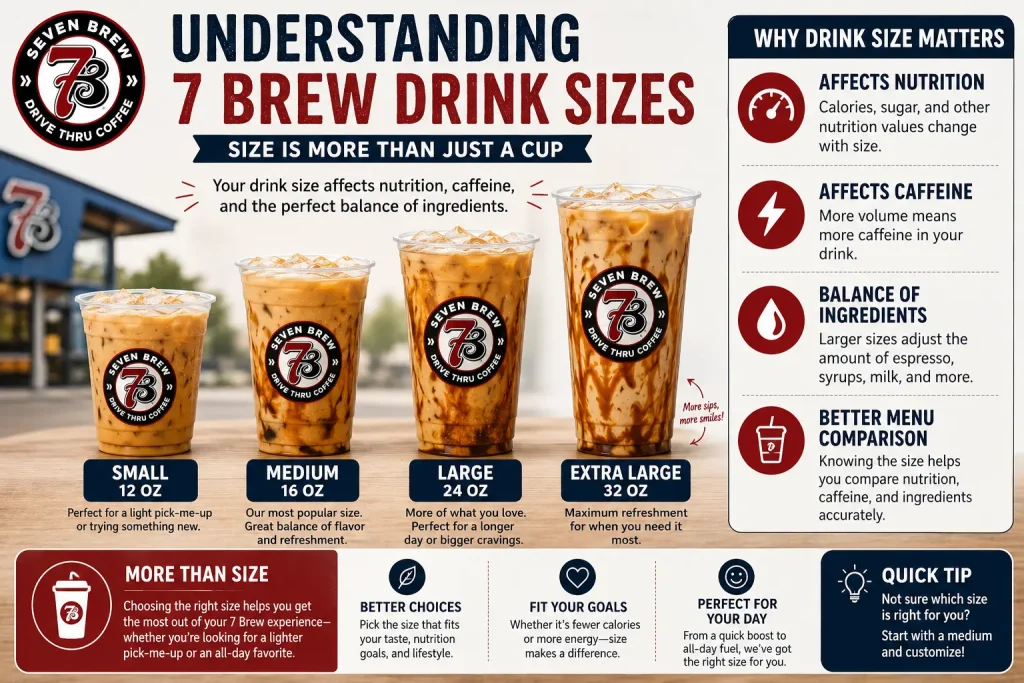
Understanding 7 Brew Drink Sizes
Choosing a drink at 7 Brew usually begins with the type of beverage, but the size you order also influences the overall experience. Beyond the amount served, drink size can affect nutritional information, caffeine content, and the balance of ingredients used to prepare the beverage. For first-time visitors, the menu can feel unfamiliar because drink sizes are often discussed alongside flavors, customization, and seasonal specials. Understanding how the sizing works makes it easier to interpret the menu without needing to compare every drink individually. This guide explains the available drink sizes at 7 Brew, how they relate to different beverages, and why size is about more than simply choosing a larger or smaller cup.
Why Drink Size Matters
At first glance, drink size may seem like a simple choice between a small, medium, or large beverage. In practice, it plays a larger role because many menu details are connected to the size that’s ordered. Nutrition information, caffeine content, and even the amount of certain ingredients can vary between sizes. While the recipe itself usually stays the same, increasing the serving size naturally changes the quantity of the finished drink. Understanding this relationship also makes other parts of the menu easier to read. When comparing nutrition facts, caffeine information, or seasonal drinks, knowing the drink size provides the context needed to interpret those details accurately.
Worth knowing: Not every beverage is available in every size. Availability may vary depending on the drink category or limited-time promotions.
The Three Standard Drink Sizes
Although individual menu items may vary, most beverages at 7 Brew are offered in three standard sizes. These sizes provide a consistent way to order across much of the menu while allowing customers to choose the amount that best fits the drink they’re interested in. The sections below explain what each size represents and how it fits within the broader menu.
Small, Medium, and Large
While the menu offers three standard drink sizes, the difference isn’t limited to the amount of liquid in the cup. Each size represents a different serving, and that can influence other details such as caffeine, nutrition, and the quantity of ingredients used to prepare the drink. Understanding what each size represents makes it easier to compare drinks throughout the menu without focusing only on ounces.
| Drink Size | What It Represents |
| Small 16 oz | The smallest standard serving available for many menu items. |
| Medium 24 oz | A mid-sized serving prepared using the same recipe in a larger quantity. |
| Large 32 oz | The largest standard serving offered for many beverages on the regular menu. |
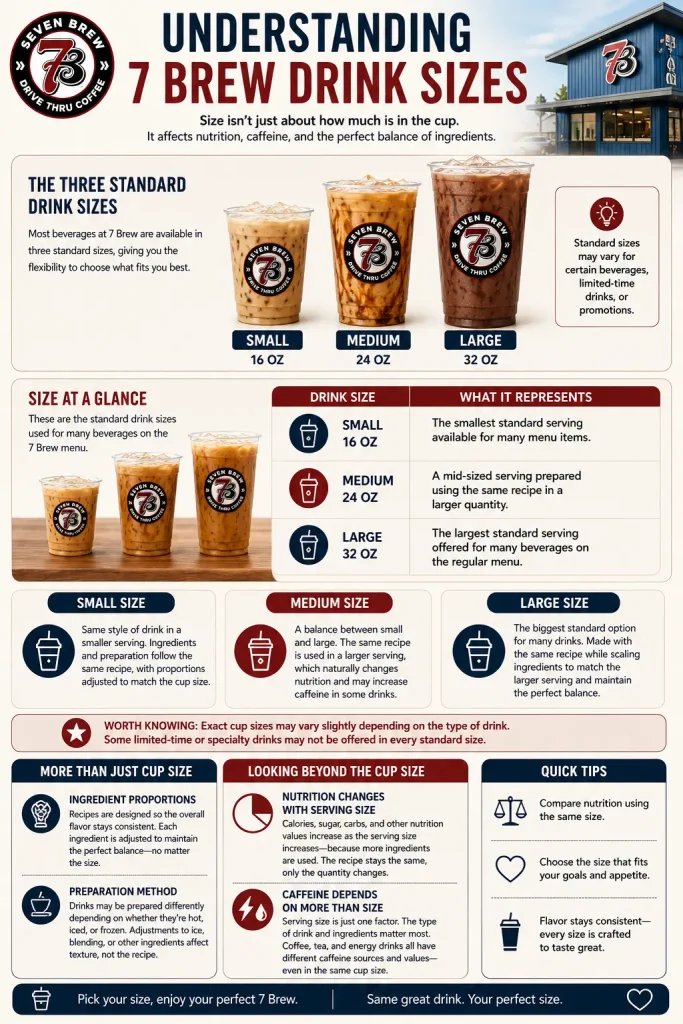
Standard sizes may vary for certain beverages, limited-time drinks, or promotions.
This table shows the standard drink sizes used for many beverages on the 7 Brew menu. While these sizes apply to most regular drinks, some specialty or seasonal items may only be available in selected sizes.
Small Size
The small size provides the same style of drink as the larger options but in a smaller serving. The ingredients and preparation generally follow the same recipe, with the proportions adjusted to match the cup size. For many menu categories, the small size serves as the reference point when comparing nutritional information or ingredient amounts.
Medium Size
The medium size sits between the smallest and largest options, offering a balance that follows the same recipe while increasing the overall serving. Although the ingredients remain consistent, the larger volume naturally changes the nutritional values and, for caffeinated drinks, may also increase the amount of caffeine.
Large Size
The large size is the biggest standard option available for many drinks on the menu. Like the other sizes, it follows the same preparation method while scaling the ingredients to suit the larger serving. Although the recipe follows the same general formula, ingredient quantities are adjusted to match the larger serving while maintaining the intended balance of the drink.
Worth knowing: Exact cup sizes may vary slightly depending on the type of drink being prepared. Some limited-time beverages or specialty drinks may not be offered in every standard size.
More Than Just Cup Size
When people compare drink sizes, it’s easy to focus only on the amount served. In practice, size also influences how a drink is prepared and how nutritional information is presented across the menu.
Ingredient Proportions
Recipes are designed so that the overall flavor remains consistent regardless of size. Rather than simply adding more syrup or another ingredient, each component is adjusted to maintain the intended balance of the drink. That’s why the same beverage is expected to deliver a similar flavor profile whether it’s ordered in a small, medium, or large size.
Preparation Method
Some drinks are prepared differently depending on whether they’re served hot, iced, or frozen. While the recipe remains recognizable, the preparation method can affect the amount of ice, blending, or other ingredients used to achieve the intended texture. These adjustments are part of the preparation process rather than changes to the recipe itself.
Looking Beyond the Cup Size
The size of a drink doesn’t only determine how much is served. It also influences nutritional values and, for many beverages, the amount of caffeine.
Nutrition Changes With Serving Size
Calories, sugar, carbohydrates, and other nutritional values are based on the amount of the finished drink. As the serving size increases, those values generally increase as well because more ingredients are used during preparation. That doesn’t necessarily mean a larger drink has a different recipe. In most cases, it simply contains a greater quantity of the same ingredients. If you’re comparing nutritional information, it’s important to check that you’re looking at the same drink size. Comparing a small drink with a large one can lead to misleading conclusions about calories or sugar content.
Caffeine Depends on More Than Size
For caffeinated beverages, serving size is only one part of the picture. The amount of caffeine also depends on the drink itself and the ingredients used to prepare it. A larger coffee drink may contain more caffeine than its smaller version, but that doesn’t mean every large drink has the same caffeine content. Coffee, tea, and energy drinks all use different sources of caffeine, so their values can vary even when the cup size is identical. For a closer look at how caffeine differs across the menu, see our Understanding Caffeine at 7 Brew guide.